

Cana.Tours ·
Paying in Punta Cana: Dollars, Pesos, Cards and Tipping
A clear price is only half the plan: agree how, when and in which currency you will pay. Use this guide for meals, shopping, beach clubs and excursions outside your resort without assuming every business follows the same rules.
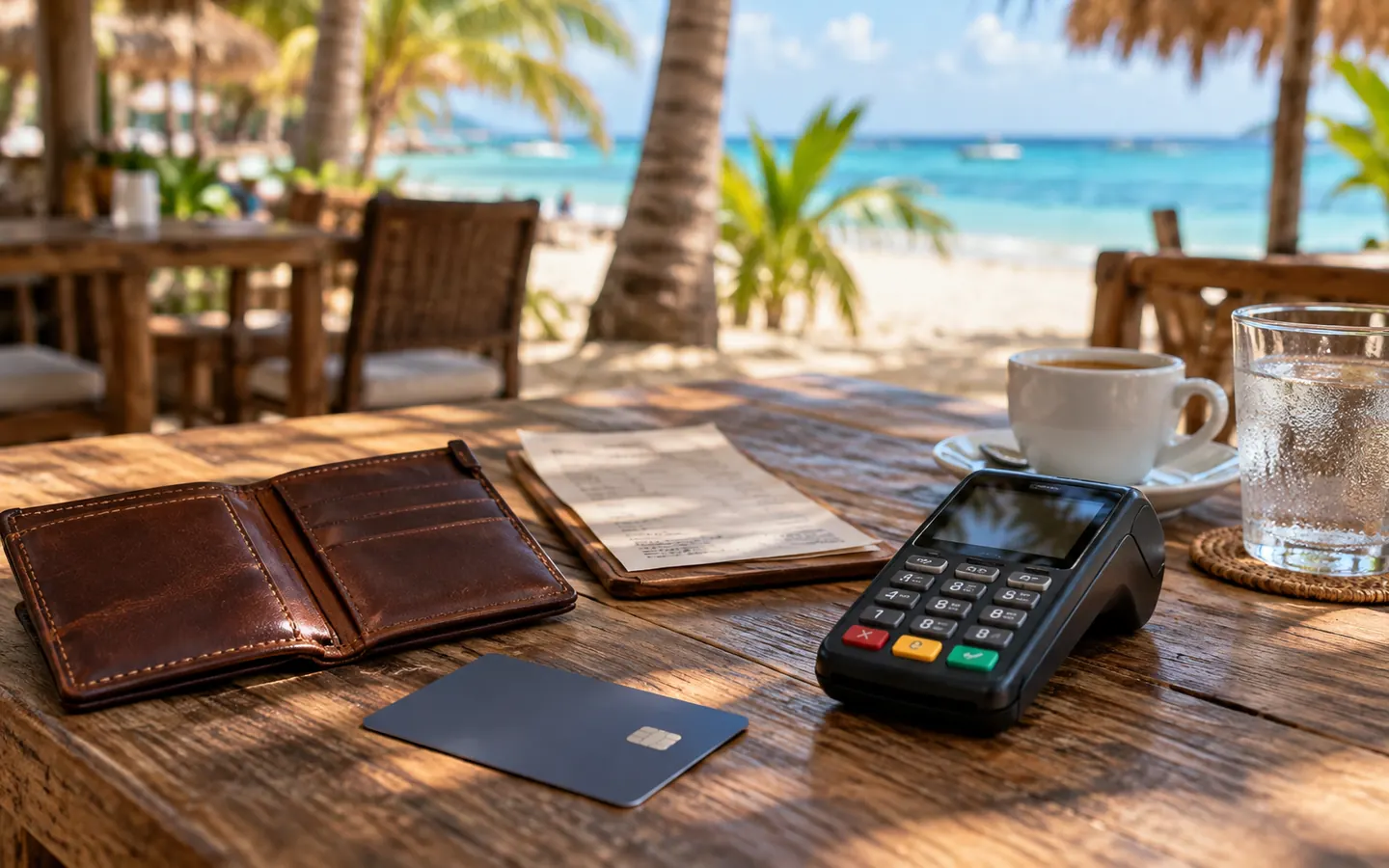
Dollars or pesos? Start with the quoted currency
The local currency is the Dominican peso, written DOP or RD$. A USD tour quote and a peso restaurant bill are different starting points; a dollar sign alone needs clarification. Ask which currency the final amount uses and which currencies the provider accepts. If paying in another currency, agree the conversion and the currency of any change first. The outing budget guide helps calculate the whole day before choosing a payment method.
Bring a payment plan, not just a card
Confirm card acceptance for the specific shop, restaurant or booking, including your card type and any minimum or extra charge. A card logo elsewhere in the area proves nothing about your chosen provider. Carry a suitable cash backup for agreed cash expenses, not a universal daily amount. For an ATM withdrawal, check the machine fee, your bank’s fees and limits, and the currency before accepting. Keep your PIN and card security code private.
Understand the conversion before approving it
For cash, ask how many pesos each dollar buys in this transaction and compare the final amount, not an unexplained rate. On a peso card bill, the terminal may offer conversion to your home currency. Declining that conversion leaves the currency exchange to your card issuer; its fees can still apply. Read the displayed amount and currency before approving, and keep the receipt. Do not accept a second conversion merely because a familiar currency looks easier.
Restaurant bills: service is not the same as an extra tip
Before ordering, ask whether the menu price includes taxes and service, and check drinks, extras and any special table arrangement. At a place such as Jellyfish Restaurant, the table and transport are separate planning questions. Read the itemised bill before adding a voluntary tip; do not automatically add an amount that has already been charged. If a line is unclear, ask what it covers and who receives any additional gratuity.
Beach clubs: distinguish a fee from spending credit
A payment for entry, a minimum spend and credit redeemable against food or drinks are not interchangeable. Ask whether the charge is per guest, table or bed; what can be redeemed; and whether tax, service or transport is separate. The beach-club comparison helps choose the setting. Keep any credit recorded so you do not budget or pay it twice. A restaurant reservation does not automatically include every beach-club facility.
Tours and transport: agree the recipient and timing
Check the published excursion prices for the correct adult, child or buggy option. Standard Cana.Tours tours require no upfront payment and are paid on the day; read the booking conditions and confirm the accepted method, currency and recipient for your reservation. Do not extend those terms to an independent restaurant or beach-club deposit. For a separate ride, use the transport guide to agree both journeys, waiting and the total before leaving.
Shopping: confirm the total and keep the receipt
For an outing to BlueMall Puntacana, ask the individual shop about payment rather than assuming one mall-wide policy. Confirm currency, final price and any conversion before paying. Keep the receipt and ask about return conditions while still in the shop. Bargaining, refunds and card acceptance are not identical at every retailer. A listed shopping destination is a place to explore, not a promise about a particular till or cash machine.
Before leaving: six details to settle
Write down the agreed amount, currency, method, recipient and timing for each booking. Separate confirmed costs from optional purchases and voluntary tips. Carry only the payment arrangements your actual plan needs, and save the booking and receipts on your phone. These checks are more useful than a single cash allowance for every hotel and travel style.
- Final amount and currency stated clearly.
- Cash or card method confirmed with the actual provider.
- Conversion, fees and change currency clarified.
- Taxes, service, credits and optional tips distinguished.
- Recipient, payment time and any separate deposit confirmed.
- Booking confirmation and receipts saved for reference.
Frequently asked questions
Should I pay in dollars or Dominican pesos?
The local currency is the Dominican peso, written DOP or RD$. A USD tour quote and a peso restaurant bill are different starting points; a dollar sign alone needs clarification. Ask which currency the final amount uses and which currencies the provider accepts. If paying in another currency, agree the conversion and the currency of any change first. The outing budget guide helps calculate the whole day before choosing a payment method.
Can I rely only on a bank card?
Confirm card acceptance for the specific shop, restaurant or booking, including your card type and any minimum or extra charge. A card logo elsewhere in the area proves nothing about your chosen provider. Carry a suitable cash backup for agreed cash expenses, not a universal daily amount. For an ATM withdrawal, check the machine fee, your bank’s fees and limits, and the currency before accepting. Keep your PIN and card security code private.
What does the terminal’s currency choice mean?
For cash, ask how many pesos each dollar buys in this transaction and compare the final amount, not an unexplained rate. On a peso card bill, the terminal may offer conversion to your home currency. Declining that conversion leaves the currency exchange to your card issuer; its fees can still apply. Read the displayed amount and currency before approving, and keep the receipt. Do not accept a second conversion merely because a familiar currency looks easier.
Should I tip on top of the restaurant bill?
Before ordering, ask whether the menu price includes taxes and service, and check drinks, extras and any special table arrangement. At a place such as Jellyfish Restaurant, the table and transport are separate planning questions. Read the itemised bill before adding a voluntary tip; do not automatically add an amount that has already been charged. If a line is unclear, ask what it covers and who receives any additional gratuity.