

Cana.Tours ·
Punta Cana Excursions: What to Wear and Bring
A boat day, a muddy buggy ride and a city walk need different preparations. Pack for the activities you have actually booked, keep your bag manageable and confirm what the operator provides before leaving your hotel.
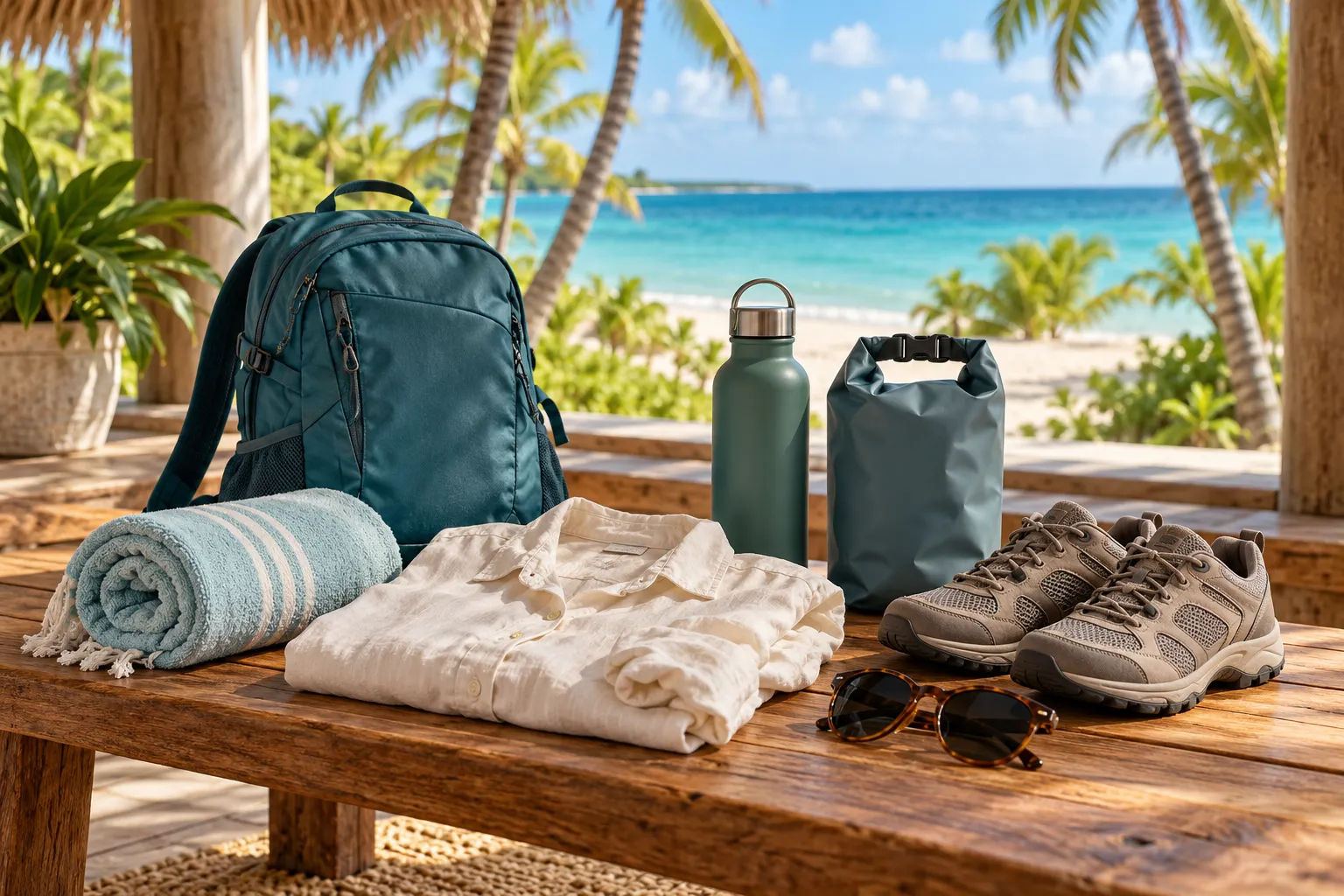
Start with the programme, not a universal packing list
Check whether your outing includes a boat, walking, driving or a permitted swimming stop. Choose clothing and footwear for those activities, then follow the operator’s requirements. Comfortable clothes for a transfer are not necessarily suitable for the activity itself. Compare the current excursion descriptions with your booking confirmation; pictures and a tour name do not establish equipment, changing facilities or storage.
Saona and boat trips: prepare for water and the return journey
For your Saona Island tour, consider swimwear, a dry change of clothes, a towel and suitable sun protection. Ask about boarding conditions and footwear before choosing shoes. Confirm whether towels are supplied, where a small bag can go and whether there is somewhere to change. Keep electronics protected from splashes; a pouch is not a guarantee against immersion. The snorkelling guide helps distinguish personal belongings from equipment the operator must confirm.
Buggy adventures: expect your clothes to get dirty
For Buggy and Cenote Adventure, choose clothes you do not mind getting dirty and separate dry items for the journey back. Ask the operator which footwear is required for driving and any swimming stop; do not assume flip-flops or water shoes suit both. Confirm supplied protective equipment and its fit. Sunglasses or a scarf do not replace required protection. Use the buggy programme comparison to prepare for your actual variant.
Ojos Indígenas: walking and swimming are separate needs
On the Los Ojos Eco Tour, plan for nature trails first and a swimming stop only where permitted on your confirmed route. Ask which shoes are appropriate for the paths and which, if any, are allowed in the water. Confirm current reserve rules for products applied to the skin, bags and changing facilities. Bring dry clothing if you intend to swim, without assuming every lagoon is open or accessible.
Santo Domingo: dress for the actual visits
For the Santo Domingo City Tour, use comfortable walking clothes and footwear you have already worn. Consider sun and rain protection that is easy to carry. Ask about clothing requirements at religious buildings or monuments on that day’s itinerary rather than applying one rule to the whole city. Los Tres Ojos is a sightseeing stop, not a swimming session. Keep what you need for a full day within easy reach.
Keep your day bag small and separate wet items
Take the belongings you need rather than your entire holiday bag. Separate wet or muddy clothes from dry items; ask about baggage limits and any secure storage instead of leaving valuables unattended. Confirm whether identification is required and in what form before deciding what to carry. A bag left on a boat or vehicle is not automatically supervised. Do not assume hotel towels may leave the property; check the hotel’s policy.
With children, confirm sizes and participation requirements
A child fare does not establish that an activity or its equipment suits your child. Give the operator ages and any relevant needs, and ask about correctly sized equipment, footwear and the day’s activities. Pack a manageable change of clothes and what your family normally needs during the confirmed time away. The family excursion guide helps you compare duration and suitability before preparing the bag.
The evening before: check the latest instructions
Review the date, exact hotel pickup, confirmed programme, current weather and operator’s packing instructions. Ask what is included, what to bring yourself and what cannot be taken on the activity. If information differs from a general guide, clarify it before departure. Agree where to meet for the return and how to contact the team. This checklist supports your booking confirmation; it does not replace the operator’s instructions or establish permission to swim or participate.
Frequently asked questions
Are towels and snorkelling equipment always supplied?
For your Saona Island tour, consider swimwear, a dry change of clothes, a towel and suitable sun protection. Ask about boarding conditions and footwear before choosing shoes. Confirm whether towels are supplied, where a small bag can go and whether there is somewhere to change. Keep electronics protected from splashes; a pouch is not a guarantee against immersion. The snorkelling guide helps distinguish personal belongings from equipment the operator must confirm.
Can I wear the same shoes for a buggy ride and a swim?
For Buggy and Cenote Adventure, choose clothes you do not mind getting dirty and separate dry items for the journey back. Ask the operator which footwear is required for driving and any swimming stop; do not assume flip-flops or water shoes suit both. Confirm supplied protective equipment and its fit. Sunglasses or a scarf do not replace required protection. Use the buggy programme comparison to prepare for your actual variant.
Can I leave my belongings on the boat or in the vehicle?
Take the belongings you need rather than your entire holiday bag. Separate wet or muddy clothes from dry items; ask about baggage limits and any secure storage instead of leaving valuables unattended. Confirm whether identification is required and in what form before deciding what to carry. A bag left on a boat or vehicle is not automatically supervised. Do not assume hotel towels may leave the property; check the hotel’s policy.
What should I check the evening before my excursion?
Review the date, exact hotel pickup, confirmed programme, current weather and operator’s packing instructions. Ask what is included, what to bring yourself and what cannot be taken on the activity. If information differs from a general guide, clarify it before departure. Agree where to meet for the return and how to contact the team. This checklist supports your booking confirmation; it does not replace the operator’s instructions or establish permission to swim or participate.